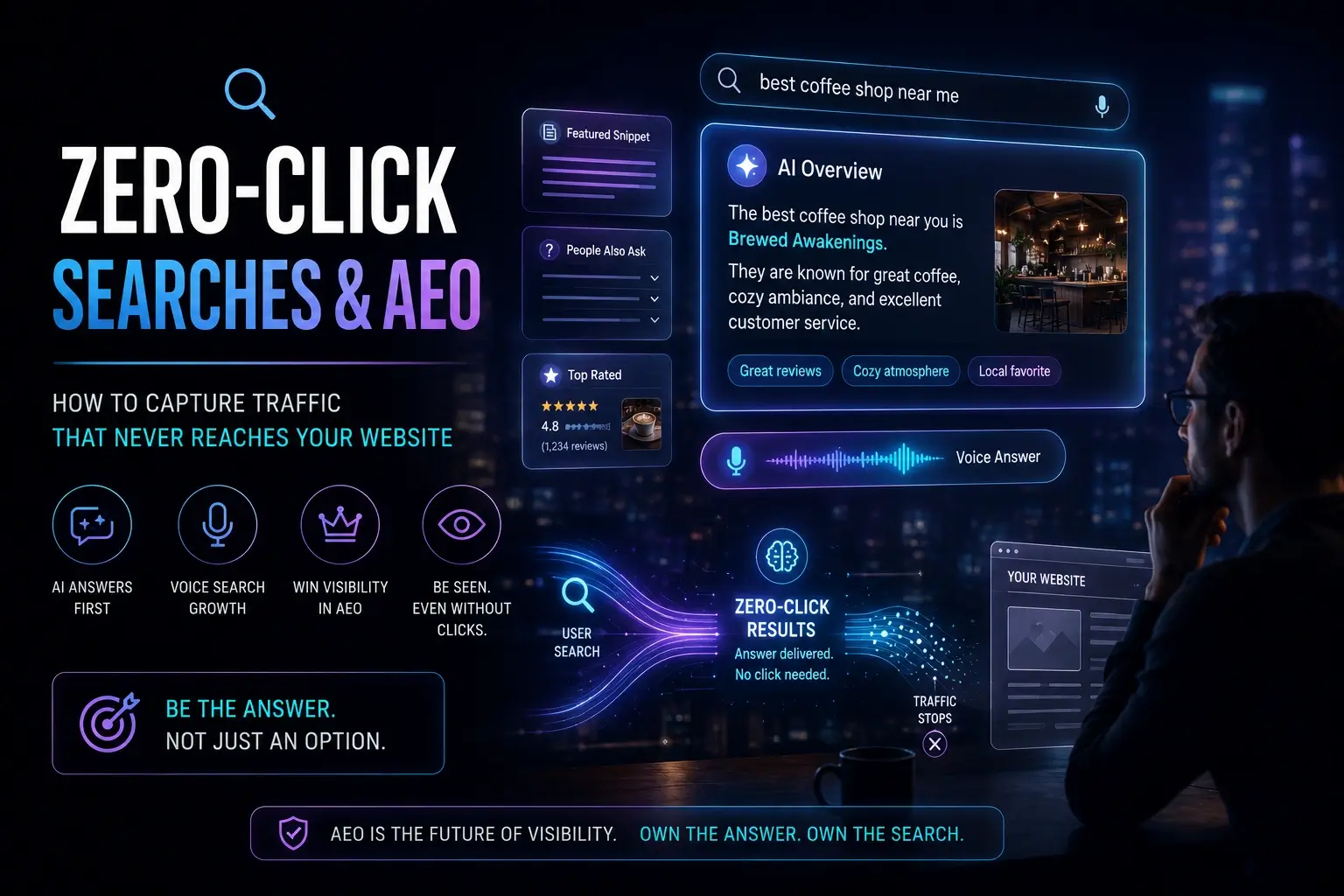
A fundamental shift has occurred in local search behavior over the past three years: a growing majority of searches now end on the results page itself, without the user ever clicking through to a website. This phenomenon known as zero-click search is driven by AI Overviews, featured snippets, knowledge panels, and Google’s rich local results, all of which deliver answers directly on the search results page.
For businesses that rely on website traffic to generate leads, zero-click search can seem like a threat. In reality, it’s an opportunity but only for businesses that have adapted their strategy to embrace Answer Engine Optimization (AEO).
Zero-click visibility is not about driving traffic to your website. It’s about your business information your name, phone number, hours, services, and reviews being the answer that appears when someone searches for what you offer. When Google displays your business in the local three-pack, reads your FAQ answer in a voice search response, or includes your information in an AI Overview, you are getting zero-click visibility. And zero-click visibility drives real-world actions: phone calls, map requests, and walk-in visits.
The strategic focus for capturing zero-click local results is threefold. First, optimize your Google Business Profile and all directory listings for completeness and accuracy these are the primary sources for zero-click local results. Second, publish structured FAQ content on your website that directly answers common queries in your business category. Third, implement FAQPage and LocalBusiness schema markup to make your content machine-readable for AI systems.
Local directory listings play a particularly important role in zero-click search because they provide the structured, consistent data that Google and AI systems draw from when composing direct answers. Your Local Pulse 360 listing when complete and regularly updated functions as a trusted data source that can contribute to your zero-click visibility across search platforms.
Measuring zero-click impact requires looking beyond website sessions. Track phone calls generated through your GBP, direction requests, map views, and direct inquiry submissions from your directory listings. These are the conversions that zero-click traffic drives.
Frequently Asked Questions
Q: If zero-click searches don’t drive website traffic, why do they matter?
A: Zero-click results drive real business outcomes phone calls, map navigation requests, walk-in visits, and direct bookings. The goal of local SEO has never been to maximize website traffic in isolation; it’s to maximize qualified customer contacts, wherever those contacts originate.
Q: Can small businesses compete for featured snippets in zero-click searches?
A: Yes. Featured snippets for local queries often come from small business websites with well-structured FAQ content, especially when those businesses are the most authoritative local source for a specific topic. Schema markup and detailed, question-answer formatted content significantly increase your snippet eligibility.
Q: How do I track zero-click conversions from my local listings?
A: Use Google Business Profile Insights to track calls, direction requests, and website clicks from your GBP. For directory platforms, check any built-in analytics for click-to-call and contact form submissions. UTM parameters on your listing links help attribute traffic accurately in Google Analytics.