
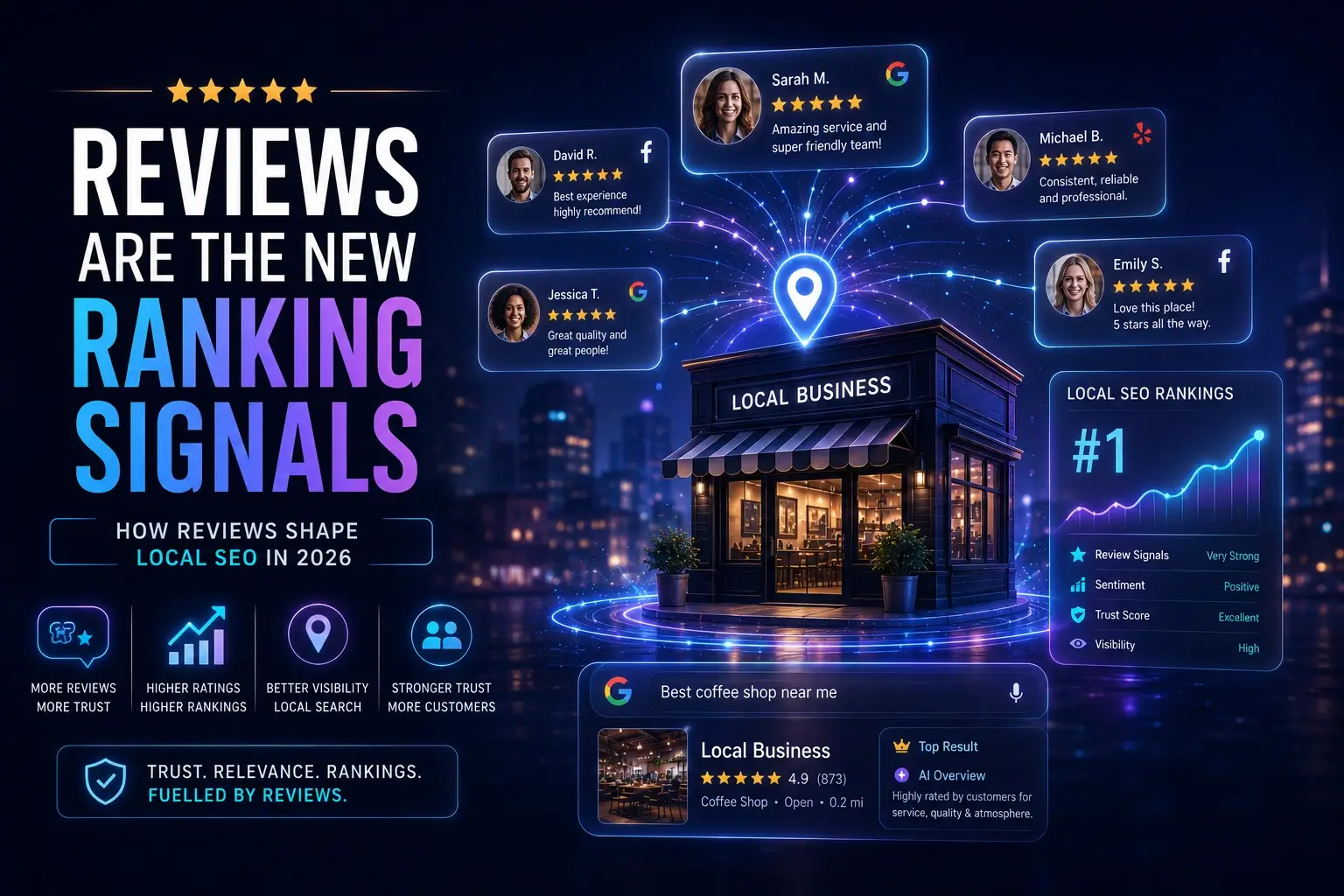
Customer reviews have evolved from a supplementary trust signal to a core local SEO ranking factor. In 2026, Google’s local search algorithm explicitly weights the quality, quantity, recency, and diversity of your reviews along with how actively you respond to them when determining your placement in local pack results and Google Maps. Understanding this evolution is critical for any business serious about local search visibility.
The most important review-related ranking factor is no longer simply your average star rating. While a 4.5+ average rating remains essential, Google now places significant weight on review recency and review velocity how many new reviews you earn per month and how recently they were written. A business with 500 reviews but whose most recent one was six months ago may under-perform a competitor with 100 reviews and 15 written in the past 30 days.
Review content itself has become a ranking signal. Google’s natural language processing capabilities now analyze the text of your reviews for keyword relevance, service-specific mentions, and location references. Reviews that organically include the names of your services, your location, and specific positive outcomes contribute more to your local relevance than brief, generic “great service!” comments. This doesn’t mean coaching reviewers on what to write it means consistently delivering service experiences that naturally prompt detailed, specific responses.
Owner responses to reviews have taken on additional SEO significance in 2026. Google’s algorithm now appears to reward businesses that respond to reviews consistently and promptly particularly responses to negative reviews that demonstrate problem resolution. Response timing matters: responses within 24 to 48 hours of a review being posted signal higher business engagement.
Diversity across review platforms also contributes to your local SEO authority. While Google reviews carry the most direct ranking weight, having a strong review presence on multiple reputable platforms including industry-specific directories and trusted local listing sites creates a broader credibility signal that AI-powered search tools increasingly recognize.
Q: Can I ask my customers to include specific keywords in their reviews?
A: You should not coach customers on specific language this violates Google’s review policies and can appear inauthentic. Instead, focus on delivering exceptional service experiences that naturally inspire detailed, specific feedback. Customers who are genuinely delighted tend to describe their experience in rich, keyword-relevant terms.
Q: How many reviews do I need to start ranking in the local three-pack?
A: The required review threshold varies significantly by industry and market. In low-competition categories, 10 to 20 quality reviews may be sufficient for three-pack placement. In competitive categories, 50+ reviews with strong recency is more typical. Research your specific category and market to calibrate your targets.
Q: Do reviews on directories other than Google help my local ranking?
A: Reviews on reputable third-party directories contribute to your overall online reputation profile, which feeds into AI trust signals and broader local SEO authority. While they don’t directly improve your Google ranking the way Google reviews do, they reinforce the cross-platform credibility that AI search tools increasingly value.